Inflatable Camping Tents: Air Beam vs Pole Stress Free Setup
By Kenji Sato • 17th Sep
Quick verdict
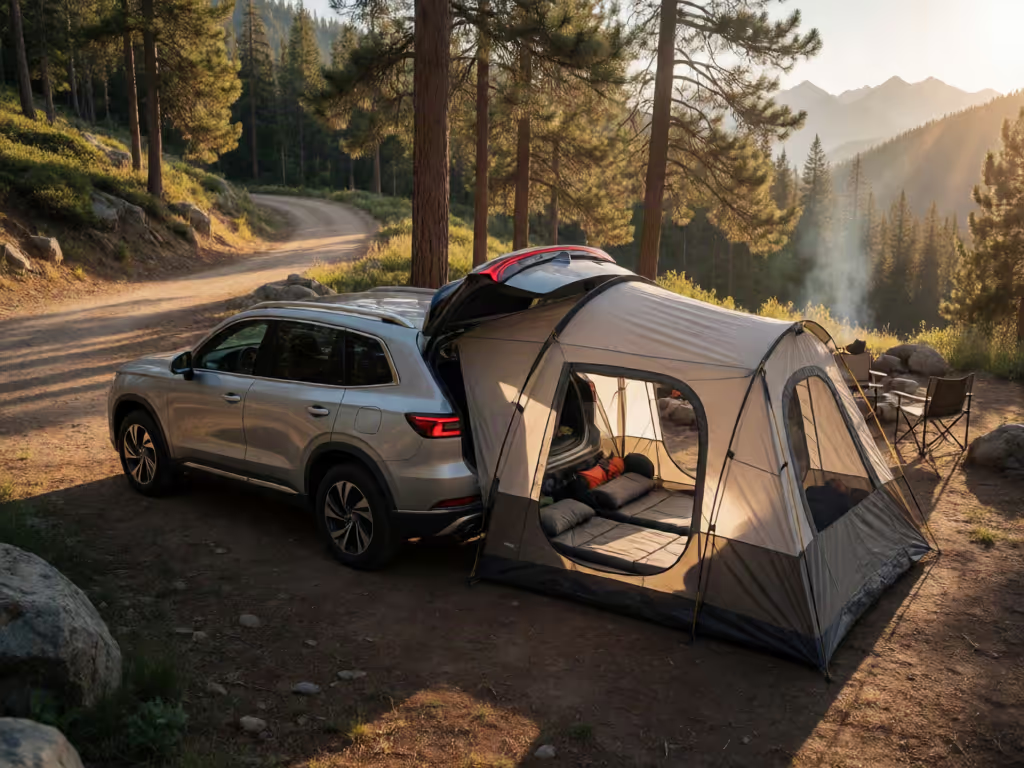
Air-beam tents can be a good choice for family car campers who value a simpler, repeatable pitch for a large shelter.
- Choose an air-beam tent if: You camp from a car or basecamp, have a large family shelter, and want an air-filled primary frame instead of conventional structural poles.
- Choose a pole tent if: You prefer a pump-free system, want to limit bulky equipment, or place particular weight on a conventional frame for exposed sites.
- Main trade-off: Air beams simplify raising the shelter but still require correct inflation, stakes, and guy lines. Wind performance is model- and setup-dependent, and the available evidence does not establish that either system is universally stronger.
Important: Whichever style you choose, dry it fully before storage, limit prolonged sun exposure, protect the floor from abrasion, and inspect seams regularly.
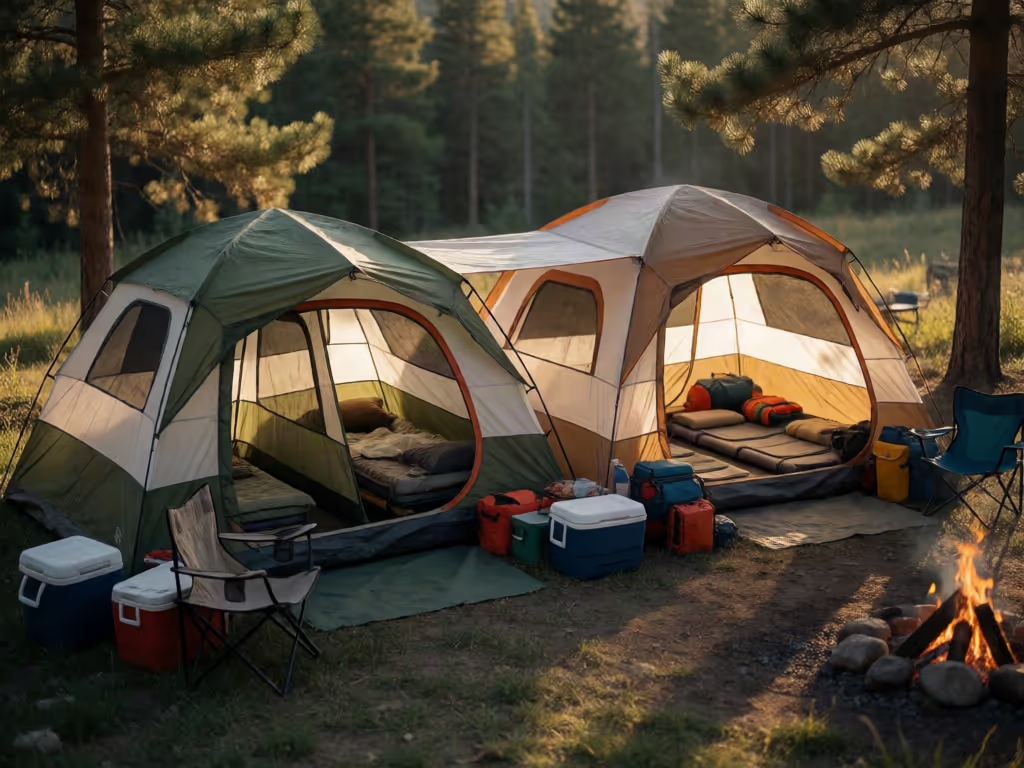
Inflatable camping tents promise a calmer arrival: unroll the shelter, connect a pump, and let air-filled beams create the frame. But in the air beam tent vs pole tent decision, the right choice is not simply "newer is better." It is about which system lets your particular crew (tired adults, children, and a dog orbiting the gear pile) get a secure bedroom standing before rain, darkness, or impatience takes over.
For family car camping and basecamp trips, an inflatable tent can be an excellent fit when predictable setup matters more than a compact carry. A conventional pole tent remains a strong option for campers who prefer its familiar components or are especially cautious about exposed, windy sites. The useful comparison is not a marketing showdown. It is a workflow test. For foundational techniques that apply across tent types, see this beginner tent setup guide.
Speed to shelter is comfort, safety, and family morale.
The Problem: Setup Is Where a Good Trip Can Start Going Sideways
A family tent rarely goes up under ideal conditions. You arrive late. The kids need the bathroom. The dog has found mud. Wind turns a rainfly into a sail while someone tries to identify which long, bendy section belongs in which sleeve.
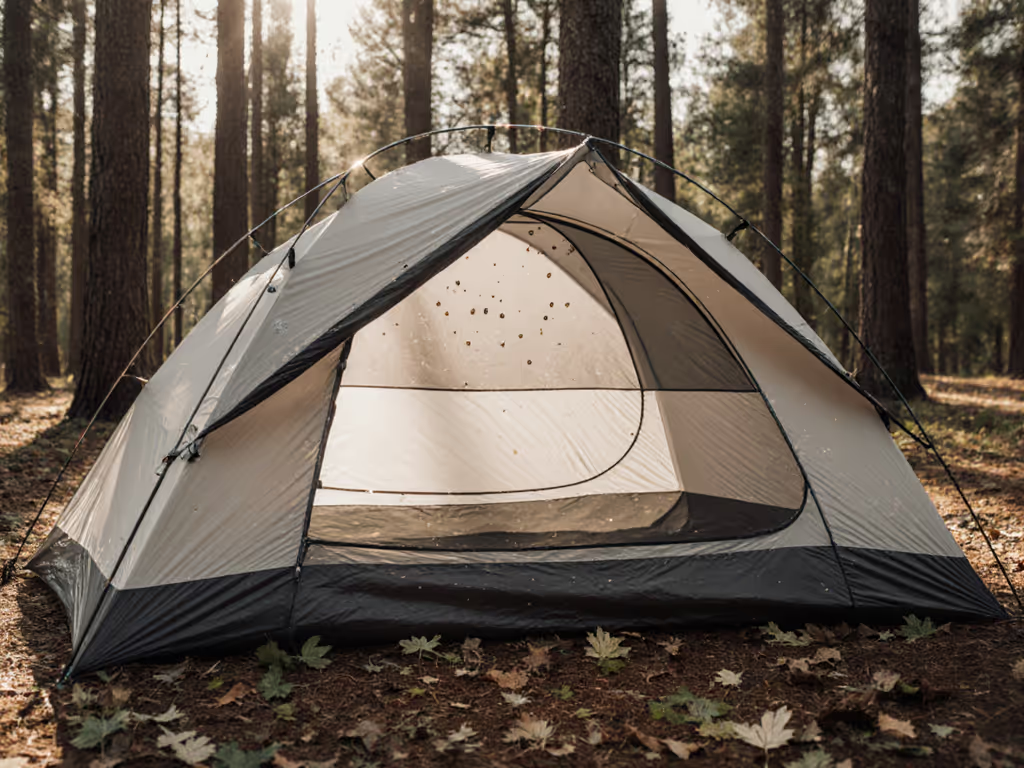
Pole tents use conventional structural poles to support the tent fabric. In a comparative field test of two specific family tents, the pole-supported model was described as simple to pitch but better with two people.
Inflatable tents replace the primary structural poles with pressurized beams. Some designs may still use a conventional pole for an awning or another secondary feature, but the main shelter shape comes from the inflated frame. That removes much of the "which pole goes where?" problem.
Why Setup Friction Matters More Than It Seems
The visible delay is only part of the cost. A confusing pitch creates the invisible problems families remember: skipped stakes, a loose fly, wet bedding left in the car, and short tempers before dinner.
The toughest version of this happens when weather moves in. On one headlamp two-minute drill, we did not beat the timer, but the tent was staked, the fly was taut, and the cocoa was still warm. That is the benchmark worth chasing: not a heroic setup time, but a repeatable sequence your group can execute without panic.
Air-tent friction points
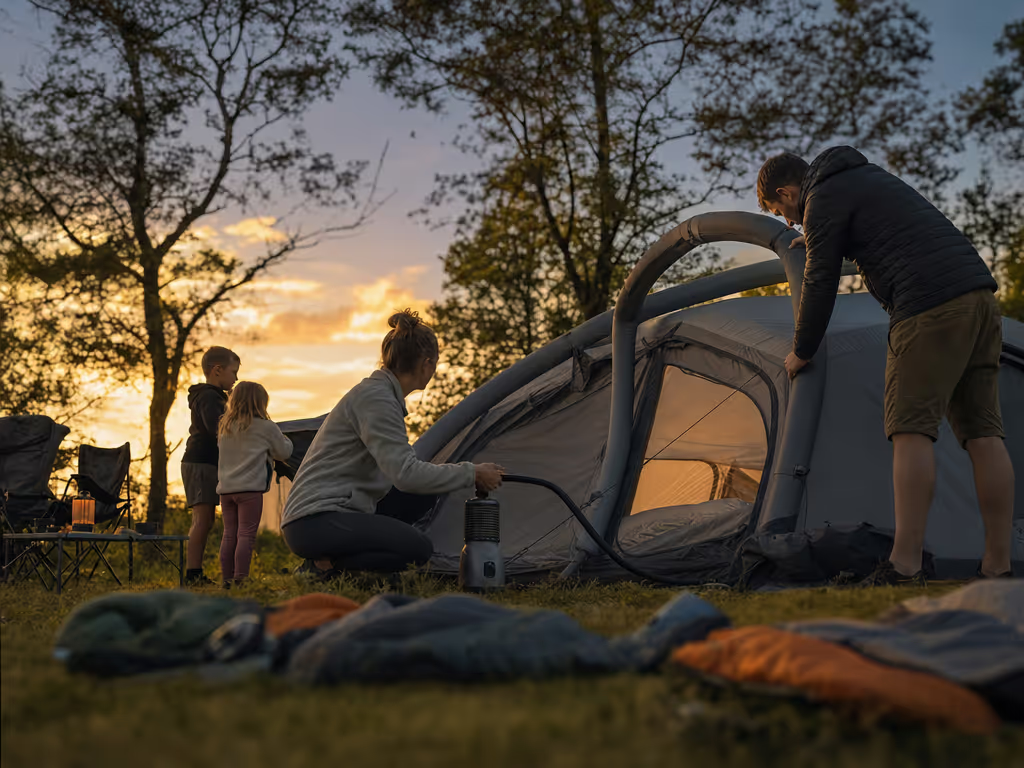
A blow-up family tent simplifies frame creation, but it does not eliminate responsibility. You must bring the compatible pump, connect it correctly, and inflate to the pressure specified for that exact tent. Underinflation leaves the structure less firm. Overinflation can affect service life and, in extreme cases, contribute to leaks or bursts.
Then comes the step that no family should skip: anchoring. Inflation makes the shelter stand; stakes and guy lines help it stay stable. Treat those as part of the pitch, not optional finishing work.
The Air Beam Tent vs Pole Tent Setup Test
Use this table as a decision filter rather than a scorecard. Individual models vary, especially in weight, packed size, internal layout, and weather behavior.
| Setup question | Air-beam tent | Pole tent |
|---|---|---|
| How is the main frame made? | Inflated beams support the fabric. | Conventional poles support the fabric. |
| What is the key setup difference? | Air-filled beams establish the shelter shape in place of conventional structural poles. | Conventional structural poles establish the shelter shape. |
| What must you manage? | Compatible pump, correct pressure, then full anchoring. | In one comparison, the pole-supported Vango Aether 450 was straightforward to pitch but better with two people. |
| Who may appreciate it most? | Car campers, basecamp users, and families prioritizing an intuitive large-tent pitch. | Campers who prefer poles and want to avoid pump dependence. |
| What is the packing tradeoff? | Carry bag and pump can be bulky; getting a large deflated tent back in its bag can take patience. | Pack size and weight are model-specific; no universal advantage follows from frame type alone. |
There is useful, but limited, real-world evidence for the setup case. In one comparison, a tester inflated the beams of a Vango Osiris Air 500 in about one minute using its supplied pump and found that one person could pitch it. The same comparison gave that air tent the edge for ease of pitching over a specific pole-tent comparator.
That is encouraging evidence, not a category-wide setup-time promise. Exact air-beam setup details and anchoring instructions vary by model, so follow the tent maker's directions.
The Solution: Build a Low-Drama Air-Tent Workflow
If you choose an inflatable tent, Color-code your calm. The goal is to turn setup into a sequence each person can remember, even in dim light.
The 6-step family pitch
- Clear and orient. Remove small rocks and twigs. Decide where doors should face before unrolling anything. A correctly sized tent footprint can protect the floor; do not let it stick out beyond the tent floor, where it could collect rainwater.
- Lay flat and square the base. Spread the tent fully so its corners and doors are obvious.
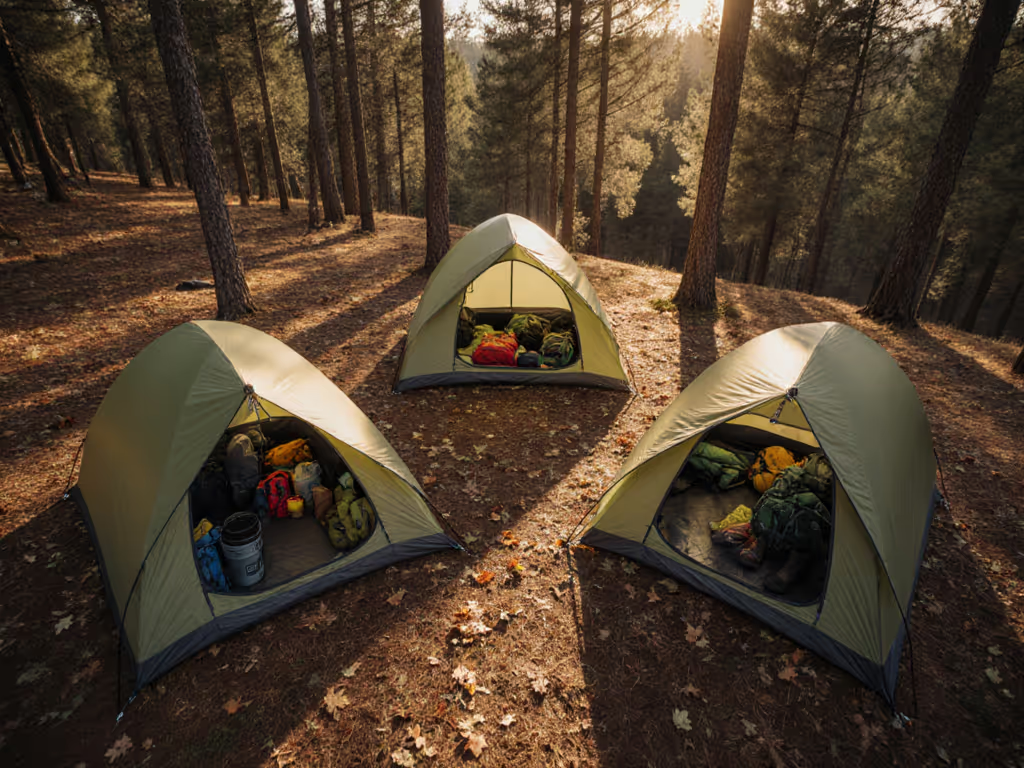
- Assign simple roles. Kids can hold labeled corner loops or bring stakes. One adult runs the pump; the other checks that fabric and guy lines are not trapped. Give the dog a safe "supervisor" spot away from valves and stakes.
- Anchor the base as the tent instructions direct. Follow the maker's specified order rather than assuming the rising frame is secure.
- Pump to the stated pressure. Use a gauge when the tent's system calls for one. Do not guess the number or borrow a pressure target from another model.
- Fit and tension every required guy line. Ensure the required stakes and guy lines are in place according to the tent instructions.
A practical timed drill
At home, run the sequence once in daylight, then once around dusk. Time only the "shelter-ready" moment: tent standing, required stakes and guy lines set, and doors functional. Do not chase another family's time. Record your own baseline and aim to remove confusion, not seconds.
Useful muscle-memory cues are short:
- "Doors first." Confirm orientation before inflating.
- "Firm, then tied down." Correct pressure is not a substitute for staking and guy lines.
- "Required anchors." Complete the tent maker's specified staking and guy-line steps.
Air Beam Tent Durability and Storm Readiness: Be Precise
Care for an air-beam tent includes its fabric shell, seams, floor, and inflatable tubes.
A punctured tube does not necessarily end an inflatable tent's life. For additional guidance when damage occurs away from home, keep this field repair guide available. A tested guide notes that tubes can be replaceable and that duct tape may serve as a temporary field measure. For a permanent repair, follow the tent maker's approved process and use its replacement parts where available.
Wind calls for even more restraint. Before camping in exposed conditions, review these tent camping safety guidelines for managing wind and severe weather. One braced air-tent model performed as well as a pole-tent comparator during a windy weekend; its internal bracing straps helped it hold shape. But another editorial assessment argues that inflatable tents do not equal domed pole tents in wind resistance, particularly when large tents receive cross-loaded wind.
The honest conclusion: do not select inflatable tents because you assume they are universally stronger in storms. Select a specific model only after considering its design, bracing, required guy lines, anchoring points, site exposure, and the forecast. Correct inflation and a thorough anchor job matter enormously, but they do not establish how a tent will perform in storms.
Keep Either Tent Ready for the Next Trip
The long-life habits are simple and apply to both frame styles:
- Dry the tent completely before storage. Damp fabric can grow mildew and harm waterproof coatings.
- Store it loosely in a cool, dry place rather than compressed in its stuff sack for long periods.
- Limit extended direct-sun exposure when camp is not active; ultraviolet light degrades tent fabrics over time.
- Clear the pitch area and use a correctly sized footprint to reduce floor abrasion.
- Inspect seams periodically. Tiny holes or failed seam tape can be addressed with a seam sealer suited to the tent fabric and coating.
FAQ
Are air beam tents any good?
Yes, especially for campers who value a simpler way to raise a large shelter. Their primary benefit is an intuitive frame setup: lay out the tent, inflate the beams, then complete the anchoring. The tradeoffs are pump dependence and potentially bulky packing.
Can an air tent survive strong wind?
It depends on the exact tent, its inflation, bracing, stakes, guy lines, campsite exposure, and the conditions. There is no universal wind capability for inflatable tents, and available editorial evidence is mixed. Use every required anchor point and choose a protected site when conditions warrant.
What is the lifespan of an inflatable tent?
The evidence behind this guide does not establish a typical lifespan for inflatable tents. Extend the life of the fabric and coatings by drying it fully, avoiding long periods of direct sun, protecting the floor from abrasion, and inspecting seams.
Is an inflatable tent worth getting?
It can be worth it when the most valuable feature is a calm, repeatable family setup and your camping style is car camping or basecamping. If you strongly prefer a pump-free system, need the smallest practical packed load, or choose campsites with frequent exposure to strong wind, a pole tent may better match your priorities.
Your Next Step: Run the Driveway Test
Before buying based on a capacity label or a glossy setup video, write down your non-negotiables: number of sleeping pads, pet space, door direction, packed-car room, and who will pitch the tent after dark.
Then practice the six-step workflow with the shelter you are considering (or with your current tent), using headlamps and assigned roles. If everyone can explain the next step without a debate, you have found the real feature families need: a predictable path to a warm, settled night.
Related Articles