
Big Family Tents: Room Dividers Vs Open Layouts Compared
By Aisha Mbaye • 15th Aug
Quick verdict
A divider-capable family tent is the better choice when your group needs optional sleeping, changing, or gear zones; an open layout is better when your actual pads, people, pet, and gear fit comfortably in one shared space.
- Choose dividers if: A home floor mock-up shows value in creating separate zones. View on Amazon
- Choose an open layout if: Your shared sleeping-and-gear plan has clear door routes and does not need partitions. A configurable tent can also be used this way by leaving its dividers out.
- Main trade-off: Dividers add flexibility and visual separation, but not verified soundproofing or better sleep. Compare usable floor space, entrances, ventilation, and maintenance—not room count alone.
Important: CORE gives conflicting figures for model 40027's queen-airbed capacity—four in its product specifications versus three in its FAQ—so measure your own beds and gear before deciding.
For shoppers comparing big family tents, here is a useful correction: a "12-person" label is not an interior plan. The real decision is whether you want a configurable interior that can be separated, or one large shared space that fits the way your pads, people, dog, and gear actually work; our realistic tent sizing guide can help you test that capacity against your group's needs. Available product info leans toward divider-capable cabin tents, and there is less apples-to-apples data for fixed open layouts, so approach the choice as a practical planning decision, not a claim that one layout wins every trip.
The most valuable tent is usually the one that still suits your family after several seasons of changing routines. Buy once, sleep well, fix forever when you can.
FAQ: What is the actual difference between dividers and an open layout?
A divider layout means a tent with included fabric panels that can create separate interior zones. An open layout means the camping plan uses the tent interior as one shared area rather than deploying divider-created rooms. That distinction matters: "open" can describe a chosen configuration, not necessarily a permanently divider-free tent design.
A configurable divider tent gives you choices. For example, the manufacturer of the CORE 12 Person Instant Cabin Tent (model 40027) says its two included dividers can create up to three separate rooms. The same tent can therefore be pitched with the dividers installed or with its interior treated as a shared area.
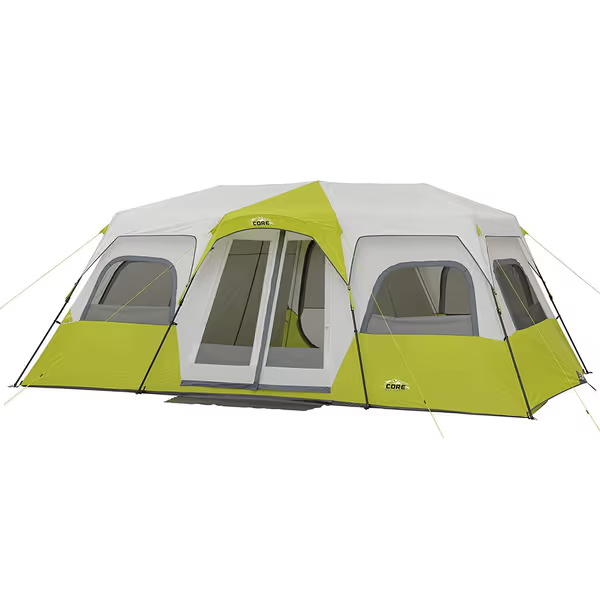
CORE Instant Cabin Tent
Spacious instant cabin tent: fast setup, superior weather protection, multi-room comfort.
$399.99
Setup Time2 minutes or less
Setup Time2 minutes or less
Pros
Pitches in minutes, even for novices.
Massive interior fits multiple queen air beds and standing height.
Robust H2O Block tech ensures dryness in storms.
Cons
Large packed size and heavy at 48 lbs.
Customers praise its easy setup, spacious interior, and storm performance, though repacking can be tricky.
Customers praise its easy setup, spacious interior, and storm performance, though repacking can be tricky.
An open shared setup gives you a different planning starting point: decide where each sleeper, bag, and piece of gear goes across the available floor before the trip. It may suit families who want one common area and do not expect to use partitions. The important point is not to assume that "open" means more usable space, easier setup, better sleeping, or a particular degree of privacy. Those outcomes depend on the specific tent and your arrangement.
The comparison in one table
| Question | Divider-created zones | One shared interior plan |
|---|---|---|
| What changes? | You can choose whether to install the included panels. | Your group plans around a single shared area. |
| Best question to ask | "Would we actually use two or three zones?" | "Can our complete pad-and-gear plan work in one area?" |
| What not to assume | Fabric panels are not verified acoustic isolation. | A shared plan is not automatically roomier or simpler. |
| Key buying check | Confirm the divider count and maximum room configuration for the exact model. | Confirm the actual floor dimensions, doors, and your pad layout. |
A capacity number is only a starting point. Your sleeping system and storage plan decide whether the floor works.
FAQ: Do room dividers improve privacy and noise control in tents?
They can visually separate zones when installed. That is the modest, realistic conclusion. CORE describes its two dividers as creating up to three separate rooms. One Ozark Trail retailer description also notes two removable dividers that create one large room or up to three rooms. That is a description for that specific tent, not proof about every Ozark Trail three-room model.
Do not buy a divider tent expecting tested noise control. For a deeper look at how tent materials and designs affect sound transmission, see our tent acoustics guide. There are no independent measurements of sound transmission, sleep quality, or privacy performance cited here. A panel may change what people can see, but it should not be treated as a soundproof wall or a guaranteed solution for an early sleeper, a crying child, snoring, or a late-night conversation.
A better way to decide: map your conflict points
Before selecting among cabin tents, list the moments that create friction on your actual trips:
- Who goes to bed first, and who remains awake?
- Will a dog sleep beside one person, at a doorway, or in a separate gear zone?
- Do you need a change-of-clothes area, or do you merely need bags kept together?
- Will wet shoes and rain gear enter the sleeping area?
- Does everyone need an exit without crossing a particular pad?
Then draw two simple sketches using your own gear dimensions. These are planning tools, not manufacturer floor plans.
Divider-deployed example
[ sleepers ] | [ shared gear / changing ] | [ sleepers ]
Shared-area example
[ pads and bags arranged together, with a defined gear edge ]
Either sketch can fail if it ignores door clearance and the floor space taken by thick air beds. Either can work if it accounts for the gear you actually bring.
FAQ: How should a large family size a multi-room camping layout?
Start with floor dimensions, then work backward from the people and sleep systems. The CORE 12 Person Instant Cabin Tent measures 18 by 10 feet and has an 80-inch center height, according to the manufacturer. Its stated capacity is 12 industry-standard sleepers, while the manufacturer identifies six people plus gear as its most-comfortable use. For many families, that latter statement is the more relevant planning reference because it explicitly includes gear.
There is one specification discrepancy worth handling honestly. CORE's product specifications say the tent fits four queen air beds, while the FAQ on the same manufacturer page says it accommodates up to three queen-size air beds. Rather than treating either count as a verified layout, measure your own beds and leave usable paths to the doors. If air mattresses are part of your setup, a floor mock-up at home is cheaper than a disappointing first night.
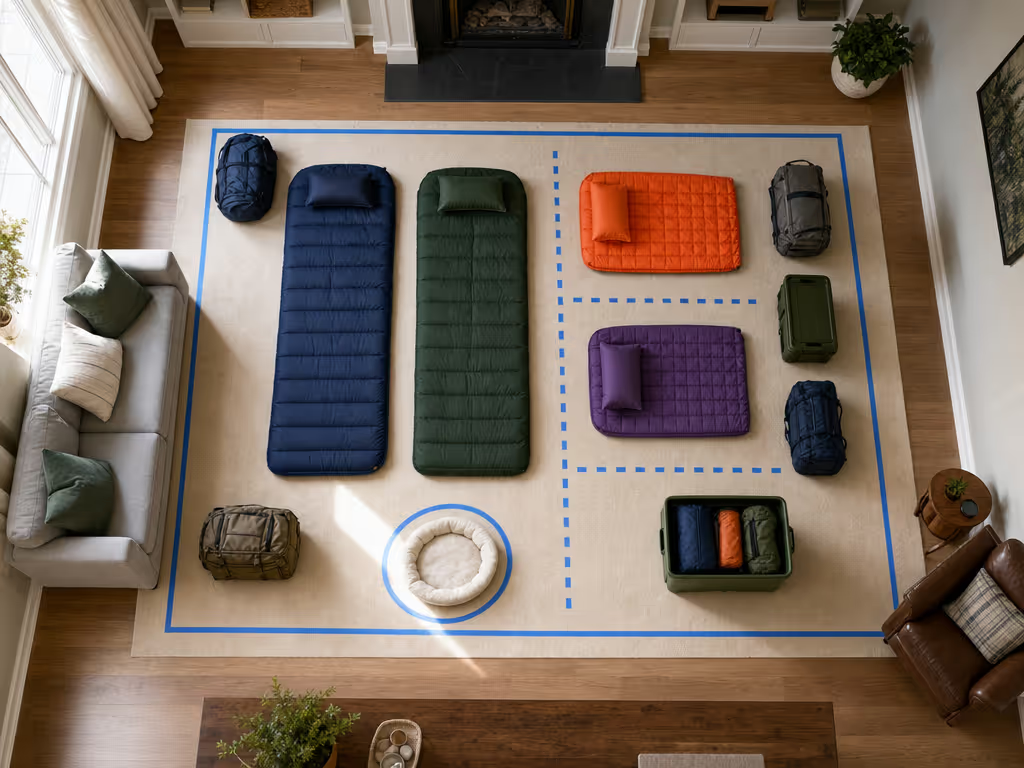
The 20-minute home fit test
- Mark the tent's stated floor dimensions on a clean floor with tape or string.
- Put down your actual sleeping pads or inflated air beds, not generic rectangles on paper.
- Add the bags, pet bed, and clothing totes that must sleep inside.
- Mark the door locations from the tent's instructions or product information.
- Walk every expected nighttime route without stepping across a bed.
- Repeat with the divider zones you expect to use.
This does not predict weather performance, but it reveals a basic truth that capacity labels cannot: whether your multi-room camping layout has a route through it.
FAQ: Are dividers worth having if we camp in warm or damp conditions?
Choose dividers for organization flexibility, not as a humidity-control feature. People add moisture to the tent while sleeping; Sea to Summit says sleepers can exhale upwards of one litre of moisture overnight. Its general guidance is to open vents and windows to circulate and dehumidify interior air, and to dry wet shoes and clothes outside rather than inside because damp gear adds humidity.
For the CORE 12 Person Instant Cabin Tent, the manufacturer lists ground vents for cool-air intake and a mesh ceiling for warm-air escape. Those are design features, not independent proof of condensation performance in every weather condition. For practical ways to manage moisture across different tent designs, see our tent condensation and ventilation guide. Still, they give you specific features to inspect and operate rather than vague "breathable" marketing language.
A practical family workflow is to decide in advance which zone is for sleeping and which is for belongings, then keep wet items out of the sleeping plan when conditions allow. That is a planning example, not evidence that dividers themselves reduce condensation or produce better sleep.
Ventilation checklist for any interior configuration
- Identify the vents and windows before your first rainy-night setup.
- Check whether your planned divider position would make a vent or door awkward to reach.
- Plan where wet footwear goes before bedtime.
- Keep the tent's airflow features available rather than assuming a divider will manage moisture.
- Follow the tent maker's setup and safety instructions.
FAQ: What should I compare besides the room count?
Room count is a feature; access and daily-use details determine whether you can use that feature comfortably. For the CORE model, the manufacturer lists two doors, multiple storage pockets, and a claimed setup time of as little as two minutes with two people using its pre-attached-pole system. Consider that setup time a manufacturer claim, not an independently timed result.
One Ozark Trail example describes three entrances, including two side doors, plus storage features such as pockets, a gear pocket, an attached mud mat, an electrical port, and a media pocket. It is useful as a reference for what to look for in a three-room description, but similar-sounding tent families should not be assumed interchangeable.
The durability and ownership questions that marketing skips
No greenwashing: a room divider does not make a tent durable, and a large capacity label does not tell you whether it is serviceable. Because warranty coverage can affect long-term ownership value, compare policies in our tent warranty guide. Before buying, ask the seller or manufacturer for clear answers to these practical questions:
- Are replacement poles, hubs, rainflies, divider panels, and zipper service available for the exact model?
- Is the warranty written clearly, including exclusions and the claim process?
- Can a damaged divider attachment point be repaired without replacing the entire tent?
- What does the floor material need beneath it to avoid abrasion at your usual campsites?
- Is the packed tent a realistic fit for your vehicle and the person who will carry it?
Keep the parts list, receipt, and instructions together. At a neighborhood repair night, I have watched a slider replacement, a floor patch, and a tightened guyline turn a write-off conversation into another three seasons of use. Replaceable beats recyclable when a small, repairable failure would otherwise end a tent's life.
FAQ: What is the best tent for a large family?
There is no universal best choice. The best fit is the tent whose verified dimensions, door plan, capacity guidance, ventilation features, and service path match your family's routine.
The CORE 12 Person Instant Cabin Tent is a concrete option for shoppers who want a manufacturer-described 18-by-10-foot cabin tent with two dividers that create up to three rooms, two doors, an 80-inch center height, storage pockets, and stated ground-vent/mesh-ceiling ventilation. Its manufacturer's own "six people plus gear" comfort guidance is more useful than treating 12 as a promise of spacious family camping.
If you prefer a shared interior, do not reject a configurable tent automatically. A divider-capable model may still let you leave the panels out. Conversely, do not pay for partitions you will never install if your home mock-up shows that one shared sleep-and-gear plan already works.
Summary and final verdict
For big family tents, dividers are a flexibility feature, not a proven cure for noise, condensation, or bedtime disruption. Choose a divider-capable layout when your own floor mock-up shows credible value in creating optional zones for sleepers and belongings. Choose a shared plan when your family's pads, pet space, gear, and door routes work cleanly without partitions.
The final verdict is simple: buy the floor plan you can measure, the capacity guidance you can interpret conservatively, and the tent you can maintain. A tent that fits your family's real routine, and has a clear path for care and parts, is worth more than an impressive room count at checkout. For additional ways to make a tent feel more comfortable and organized in use, see our true tent capacity and comfort guide.
Related Articles