Canvas Bell Tents: Setup, Stove Jacks, and Care That Lasts
By Aisha Mbaye • 2nd Sep
What to do
Care guidance for cotton-canvas tents emphasizes disciplined setup and moisture control—not wishful thinking.
- Start with: Follow your tent’s groundsheet and pole sequence. Boutique Camping specifies flat, bump-free ground for its Classic Bell Tent, while CanvasCamp advises elevated, well-drained ground for cotton-canvas tents. On the Classic Bell Tent, check for creases, straight poles, secure pegs, and correctly tensioned guy lines.
- Then: Keep vents partly open, air the tent daily, and check peg tightness after wet weather where specified. Dry it fully before storage; if packed wet, follow the manufacturer’s drying deadline.
- Important prerequisite: Use a stove only when the tent and stove manuals explicitly support the arrangement.
Important: CanvasCamp says inadequately maintained cotton canvas can seep during prolonged heavy rain. Manufacturer guidance is model-specific: check your manual for service-life expectations, long-term pitching, stove clearances, and stove-jack use.
Manufacturer guidance for cotton-canvas tents emphasizes careful setup, moisture management, and model-specific stove precautions. For the models covered here, setup should follow the maker’s instructions, and CanvasCamp warns that inadequately maintained cotton canvas can seep during extended heavy rain. The dependable approach is to pitch with even tension, manage moisture every day, and treat any stove jack as a model-specific safety system rather than a cozy upgrade.
For outdoor canvas, guidance supports clean, thoroughly dry storage in a cool, dry place with air circulation. CanvasCamp also calls for regular inspections of its cotton-canvas tents when they remain pitched continuously. Buy once, sleep well, fix forever when you can.
The problem: avoidable maintenance and stove risk
For CanvasCamp’s cotton-canvas tents, long-term pitching calls for regular inspection and cleaning. Any stove plan also requires reading the tent and stove instructions together.
The trade-off is maintenance exposure. CanvasCamp says extended heavy rain can seep through inadequately maintained cotton canvas. For its cotton-canvas tents, CanvasCamp says prolonged UV exposure can weaken fibers, fade color, and shorten a tent’s lifespan. Its guidance also says snow-load buildup can strain fabric and bend poles. None of that means canvas is a poor material; it means a canvas tent is not a maintenance-free purchase.
Scuffs are stories, not failures. Damp storage, neglected seams, and unexamined tension are the expensive problems.
This is also why "4-season" language needs skepticism. The manufacturer guidance here does not establish universal wind ratings, snow-load ratings, or year-round pitching approval for canvas bell tents. Your tent's manual, not a label or a social-media setup, sets the useful limits for your specific shelter.
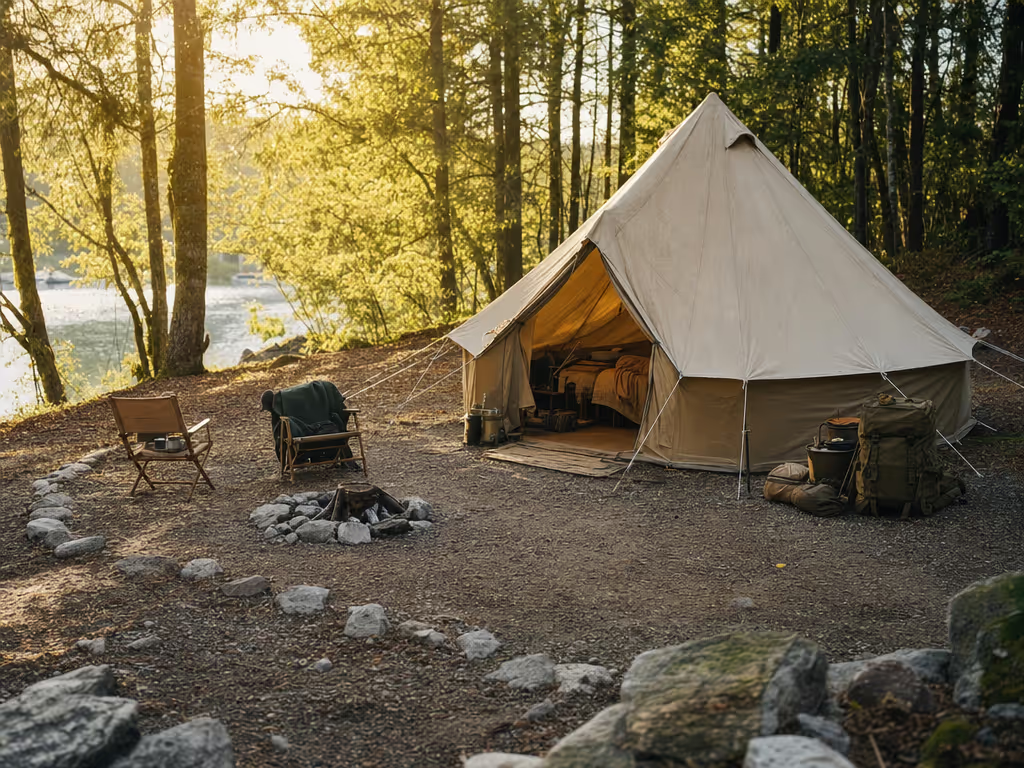
Agitate: the mistakes that create avoidable problems
A casual pitch creates uncertainty when weather changes
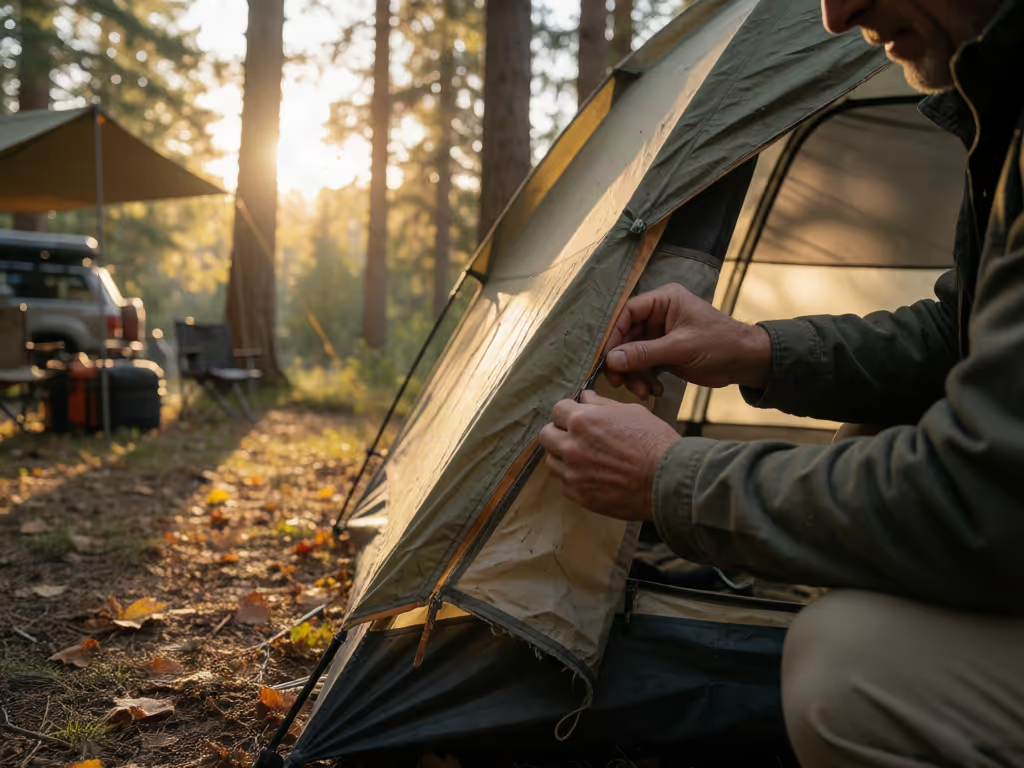
A glamping bell tent setup is simple in concept, but it is not a reason to skip the final walk-around. Manufacturer instructions for one Classic Bell Tent specify a flat, bump-free plot, with doors zipped before the pegs are secured. For broader step-by-step guidance, follow this beginner tent setup guide before adapting the sequence to your bell tent's manual. That is model-specific guidance, but the underlying discipline travels well: follow the sequence in your manual and inspect the shape before moving beds, bins, and people inside.
On that Classic Bell Tent, the groundsheet is stretched into a circle and its elastic rings and eyelets are staked before the structure goes up. For Boutique Camping's Classic Bell Tent, the center pole is placed straight at the designated center points of both groundsheet and roof. Its guy ropes are staked at least one metre from the tent and aligned with wall seams. Those measurements and steps are not universal bell-tent rules, so do not transplant them blindly to another design.
What should you look for? On that same model, kinks or creases in the fabric are an instruction to reassess tension: keep the poles straight and adjust the guy ropes. Treat this as a pre-bedtime check, not a cosmetic detail. After wet weather, check pegs again; its manufacturer notes that softened ground can loosen them.
Condensation is managed, not wished away
A 4-season canvas tent condensation plan begins with ventilation, not with a miracle coating. For more strategies, see these tent condensation solutions for managing airflow across changing conditions. CanvasCamp advises keeping vents partially open to reduce interior condensation. Boutique Camping's guidance for its Classic Bell Tent also calls for daily airing by opening doors and windows and, where the design permits, opening or rolling up the groundsheet sides.
That means choosing a livable setup before sleep: locate wet footwear and rain gear so they do not block the openings you intend to use, and do a morning air-out even if the forecast is clear. In wet conditions, choose elevated, well-drained ground rather than a low spot where puddling is likely.
Do not overpromise waterproofness, either. CanvasCamp says extended heavy rain can seep through cotton canvas if the tent is not properly maintained. Boutique Camping says that small seam leaks may occur in the first heavy rainfall for its cotton-canvas tent and may close after the cotton dries; that is not a guarantee that every leak, tent, or seam will resolve itself. Investigate persistent leakage according to the tent maker's care instructions.
Solve: a repeatable setup and care routine
Pitch first, furnish second
Before unloading the entire vehicle, use this sequence:
- Pick the site. For a Boutique Camping Classic Bell Tent, choose flat, bump-free ground. CanvasCamp advises elevated, well-drained ground for cotton-canvas tents to avoid puddling.
- Follow your model's groundsheet and pole order. Close doors if your instructions require it before pegging, and use the supplied attachment points as directed.
- Set the structure and step back. For Boutique Camping’s Classic Bell Tent, confirm that the center pole is straight and placed at the center points of the groundsheet and roof. Check the fabric for obvious creases or kinks and follow the manual's tension-adjustment procedure.
- Stake and inspect guy lines exactly as specified. Do not assume another brand's rope distance or alignment is appropriate for yours.
- Plan the room on the groundsheet. Put sleeping pads and pet beds down before inflating mattresses or arranging furniture. Leave a clear route to the door and avoid treating the center pole as invisible.
- Recheck pegs after wet weather where specified. Boutique Camping notes that softened ground can loosen the pegs on its Classic Bell Tent.
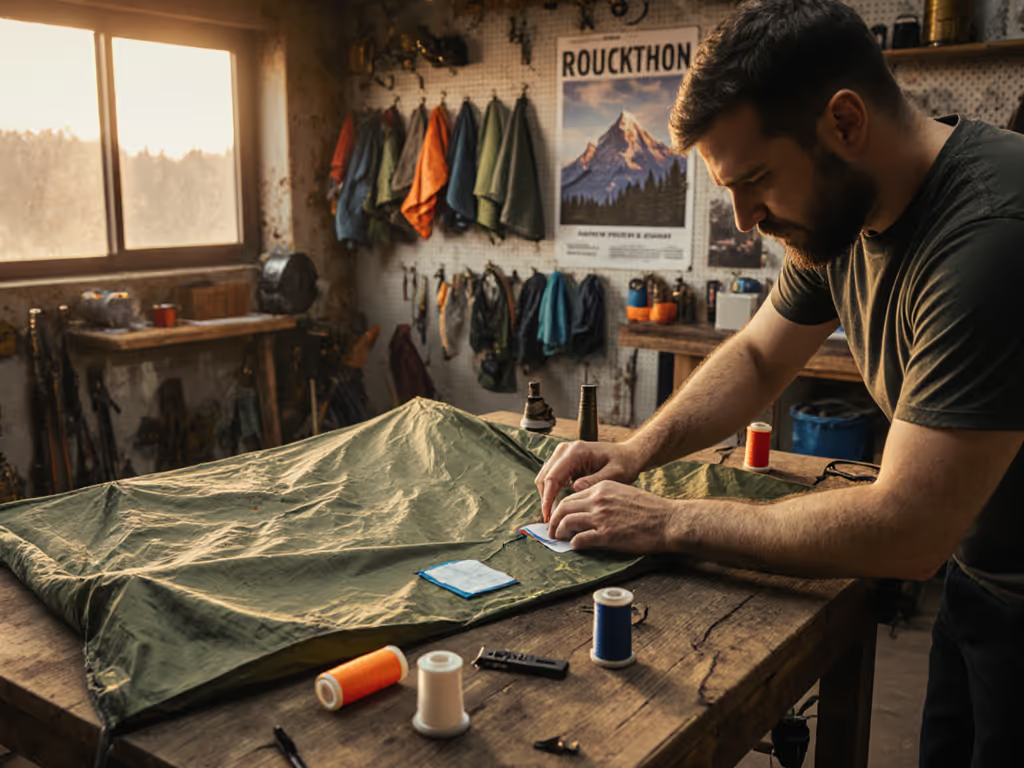
A few minutes here reduces the friction that turns a late arrival into an argument. If your own manual permits field repairs, keep these emergency tent repair techniques as a reference, but use only methods approved for your model.
Stove jacks: compatibility before convenience
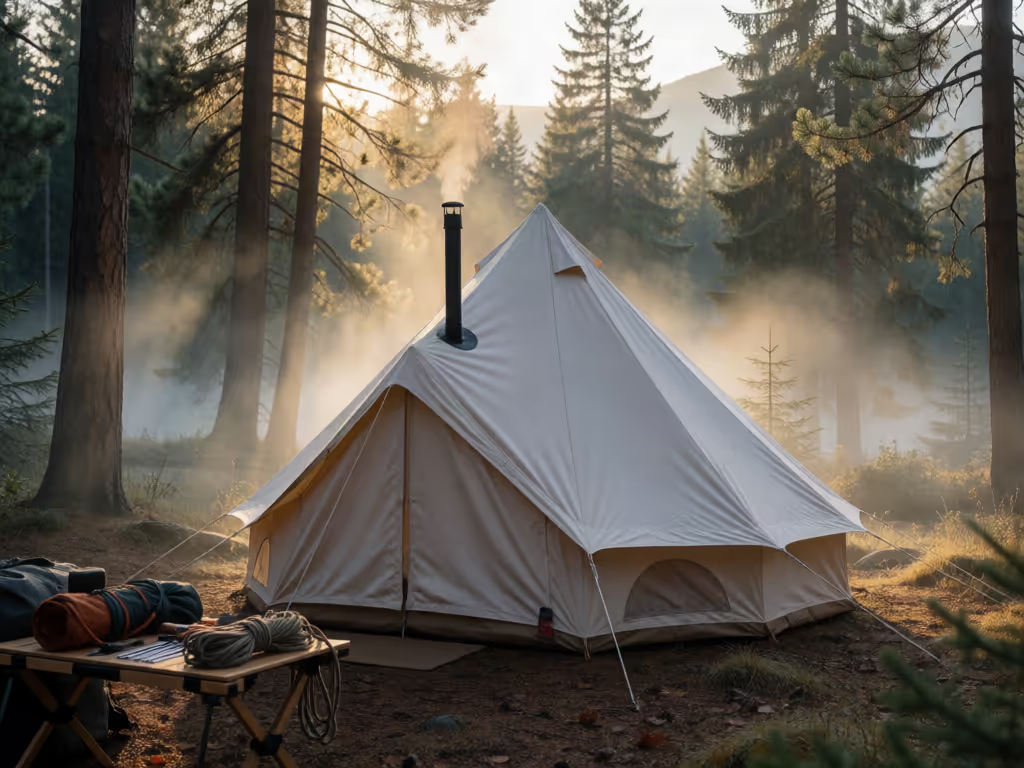
Stove jack canvas tents need a stricter decision process. A stove jack or reinforced flue-exit area does not by itself establish that a tent is suitable for a wood stove. Before installing anything, confirm that the tent has a purpose-designed stove jack and that both the tent manufacturer and stove manufacturer explicitly support the intended pairing. Then follow the exact tent and stove manuals for installation and permitted use, and use the specific stove manual to determine exact clearances.
Generic numbers are especially risky here. One tent maker's guide gives a minimum 6-inch clearance from its canvas walls to the stove body and flue, plus a fire-resistant hearth mat extending 12 inches beyond the stove footprint on every side. Those are that maker's figures, not category-wide rules, and the same guide directs users back to the stove manual for precise requirements.
A responsible tent-stove checklist includes:
- A purpose-designed, manufacturer-compatible tent and stove arrangement.
- The exact clearance requirements in the specific stove installation manual. If you are following Stout Tent’s guide, it also specifies a fire-resistant hearth mat extending 12 inches beyond the stove footprint on every side.
- Correctly assembled and secured flue sections as the stove maker directs.
- A spark arrestor compatible with the stove system can reduce the escape of sparks and embers from the flue. Stout Tent advises inspecting and cleaning the flue and spark arrestor regularly for creosote buildup.
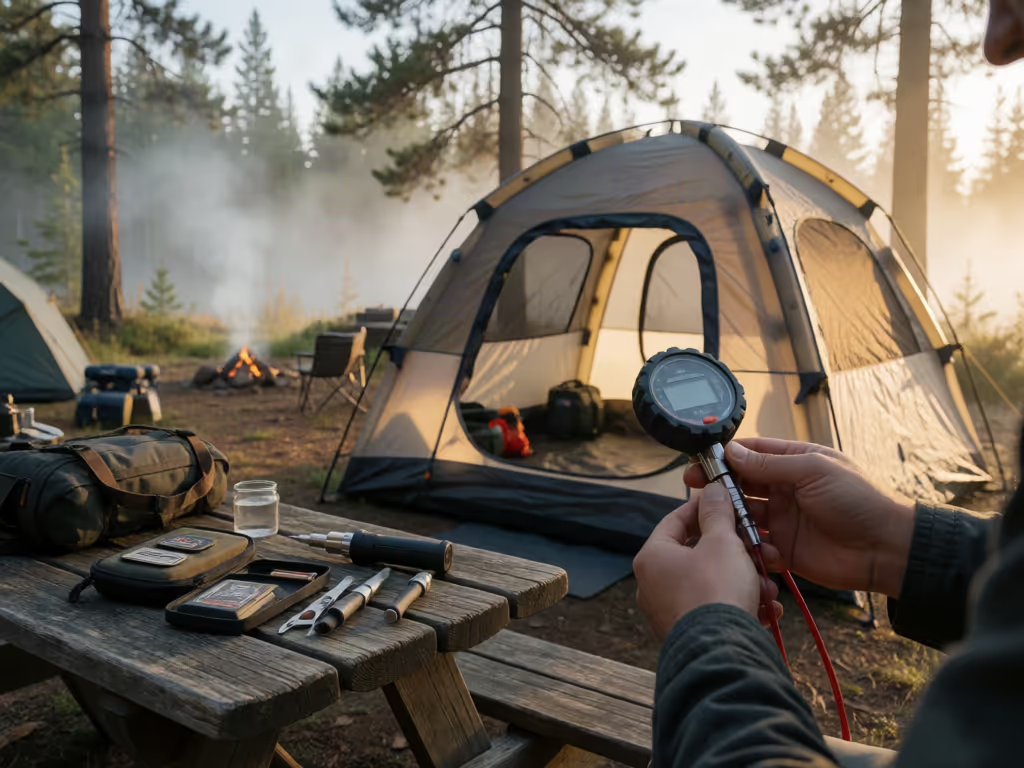
- A carbon-monoxide alarm used and maintained according to its own manufacturer's instructions.
- Continuous ventilation and active supervision while the stove is lit, as directed by the applicable manufacturer instructions. Stout Tent says a lit stove should never be left unattended.
Several stove and tent manufacturers recommend a CO alarm, but it does not remove fire or carbon-monoxide risk. Because stove use adds serious hazards, review this tent camping safety guide before relying on any heated shelter setup. Anevay's guidance is unequivocal: keep the tent ventilated, keep a door open, and do not sleep while the stove is lit. Stout Tent says never to leave a lit stove unattended. Manufacturer guidance does not replace the applicable tent and stove manuals.
Care that protects total cost of ownership
Drying and storage matter more than a cosmetic clean
The simplest bell tent care tips are also the highest-value ones: keep canvas clean, dry it thoroughly, and allow air circulation in storage. If you must pack a Boutique Camping Classic Bell Tent wet, its instructions say to hang it to dry within 48 hours; other tents may have different requirements, so consult their manuals. For any natural-fiber canvas, avoid sealing it in plastic for long-term storage unless it is verifiably dry.
For CanvasCamp’s cotton-canvas tents that remain pitched continuously, inspect regularly for leaves, dirt, and debris, and clean at least every 12 months. CanvasCamp also advises taking down a long-term-pitched tent before storms or snow, and when it will sit unused for weeks. Brush snow off daily rather than allowing load to build.
Treatments deserve a similarly unsentimental view. Wax treatments may offer durable water resistance but can make canvas heavier, stiffer, and less breathable. DWR treatments preserve breathability but are water-resistant rather than fully waterproof and require periodic reapplication. Never apply a treatment until the canvas is clean and completely dry, and confirm compatibility with both the tent and treatment manufacturer (especially where flame-retardant finishes or stove use are involved).
Quick answers
How long do canvas bell tents last?
The guidance here provides no reliable universal lifespan or service-life range for canvas bell tents. For its cotton-canvas tents, CanvasCamp says prolonged UV exposure can weaken fibers, fade colors, and shorten a tent’s lifespan. Keep canvas clean, fully dry, and well ventilated, and follow the storage guidance for your specific tent. Measure value in maintained nights of use, not a promised number of seasons.
Can a bell tent stay up all year?
Do not assume so. For CanvasCamp’s long-term-pitched cotton-canvas tents, the guidance calls for regular inspection and cleaning, plus takedown before storms or snow and during lengthy periods of nonuse. Check your own tent’s manual for its long-term pitching guidance.
Do canvas tents leak in heavy rain?
CanvasCamp says extended heavy rain can seep through inadequately maintained cotton canvas. Initial seam leakage discussed by one manufacturer for its own tents should not be treated as a universal self-repair mechanism.
Final verdict
Follow the guidance for your exact tent: use its setup sequence and airflow instructions, store canvas fully dry, and apply only compatible treatments. For Boutique Camping's Classic Bell Tent, also check peg tightness after wet weather. If you use a stove in a manufacturer-approved tent-stove arrangement, follow the applicable manuals. Manufacturer guidance recommends ventilation and a CO alarm; Anevay says not to sleep while a stove is lit, and Stout Tent says never to leave a lit stove unattended.
The practical choice is a tent whose setup, drying, storage, and maintenance instructions you can consistently follow.
Related Articles