Tent Fan Basics for Cooler, Quieter Hot-Weather Camping
By Eliza Kowalski • 29th Sep
What to do
For a cooler-feeling, less clammy tent, build ventilation first and use a fan as a comfort supplement.
- Start with: Tension the rainfly, create cross-ventilation where weather permits, and keep wet items out of the sleeping area. A fan moves air across skin but does not replace exchanging humid air with outside air.
- Then: Test the fan at home on the lowest useful setting, checking noise, vibration, runtime, and placement before the trip. Direct airflow toward people rather than loose fabric or gear.
- Important prerequisite: Follow the tent and fan instructions and do not assume ceiling loops can support a fan. If the fan uses lithium-ion batteries, use an approved charger and never charge it unattended or while sleeping.
Important: No independent testing establishes universal fan performance, noise, runtime, or overnight suitability, and condensation can still occur despite ventilation.
A tent fan can make tents feel far more livable on a sticky evening, but it works best as one part of a deliberate airflow routine, not as a miniature air conditioner. For families, couples, and campers sharing floor space with a dog, the goal is not heroic heat management. It is a quiet, repeatable bedtime setup that improves hot weather camping comfort without turning the tent into a cluttered, humming mess.
The useful distinction is simple: a fan moves the air already in the shelter, creating a cooling sensation on skin. Ventilation exchanges humid indoor air with outside air. You usually need both. For a deeper look at hot-weather ventilation strategies, focus on creating air exchange before relying on a fan for comfort.
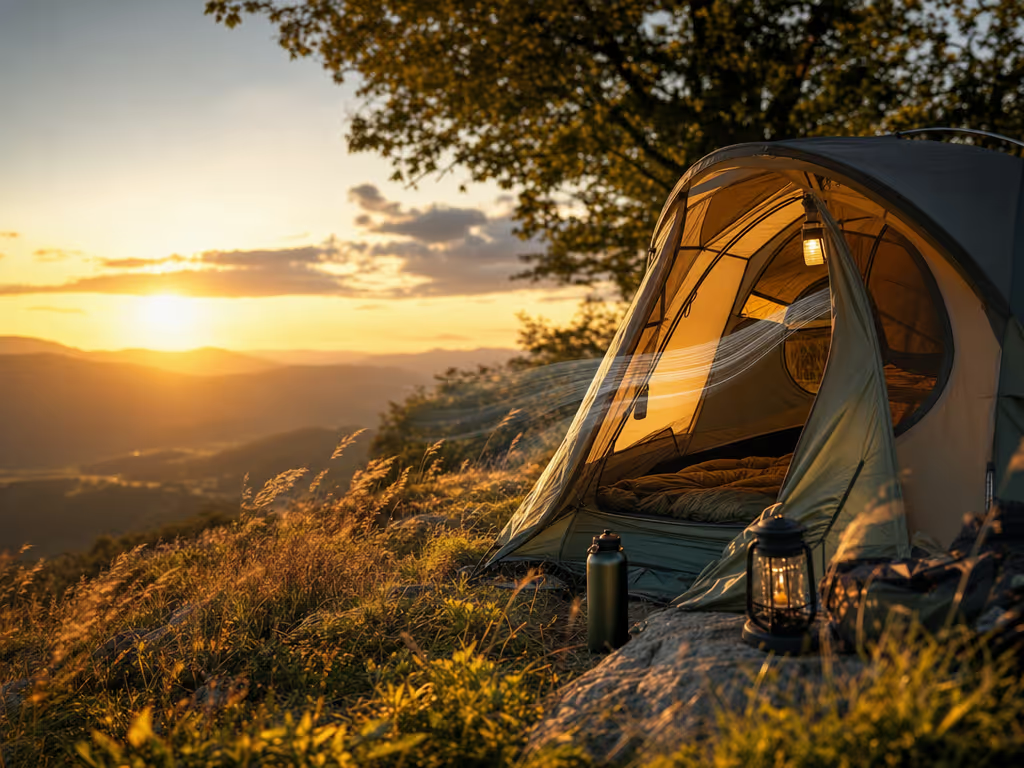
What is the best way to cool a tent?
Start with the tent before switching on anything. A fan can help you feel cooler, particularly when the air is still, but it does not establish that the air inside the tent itself has become cooler. Think of it as the final comfort layer after you have made airflow possible.
Build an air-exchange path
Warm air inside a tent carries moisture from ambient humidity, breathing, and wet items brought indoors. When that warmer air meets a cooler rainfly, moisture can condense on the underside. That is why a tent can feel close and clammy even when the evening temperature seems manageable.
Use the openings your shelter provides, while preserving the weather protection the night requires:
- Open opposing rainfly vents and inner-tent windows when conditions allow. This encourages cross ventilation rather than simply opening one small gap.
- Stake the tent taut and tension the fly so there is as much airspace as the design allows between fly and inner wall.
- Keep the fly and inner from touching on a double-wall shelter; contact can make condensation management harder.
- Roll back a vestibule door or part of the fly only when rain protection, privacy, insects, and wind conditions permit it.
Tent orientation is not a universal rule. One set of camping guidance advises placing the door into a gentle breeze, while another suggests positioning openings to capture cross-flow. In practice, assess the actual site: where the breeze enters, whether rain could blow through an opening, and whether your tent remains properly tensioned. Separate weather from user error by changing one variable at a time instead of assuming the shelter, or the fan, is the problem.
Make the fan serve the airflow plan
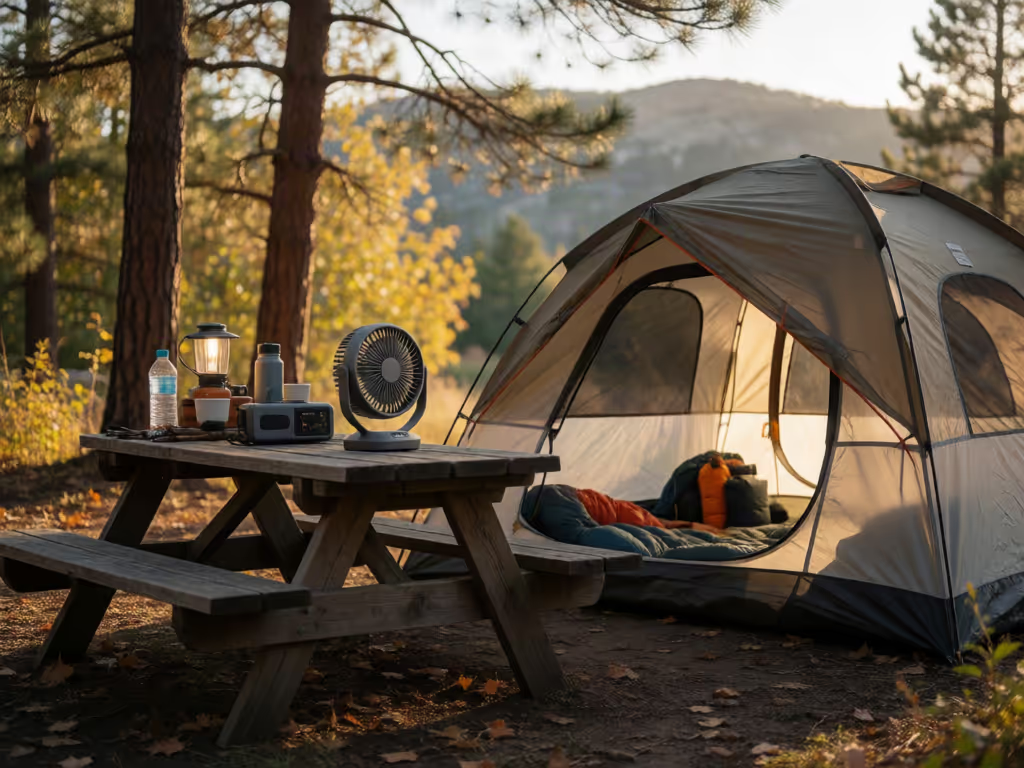
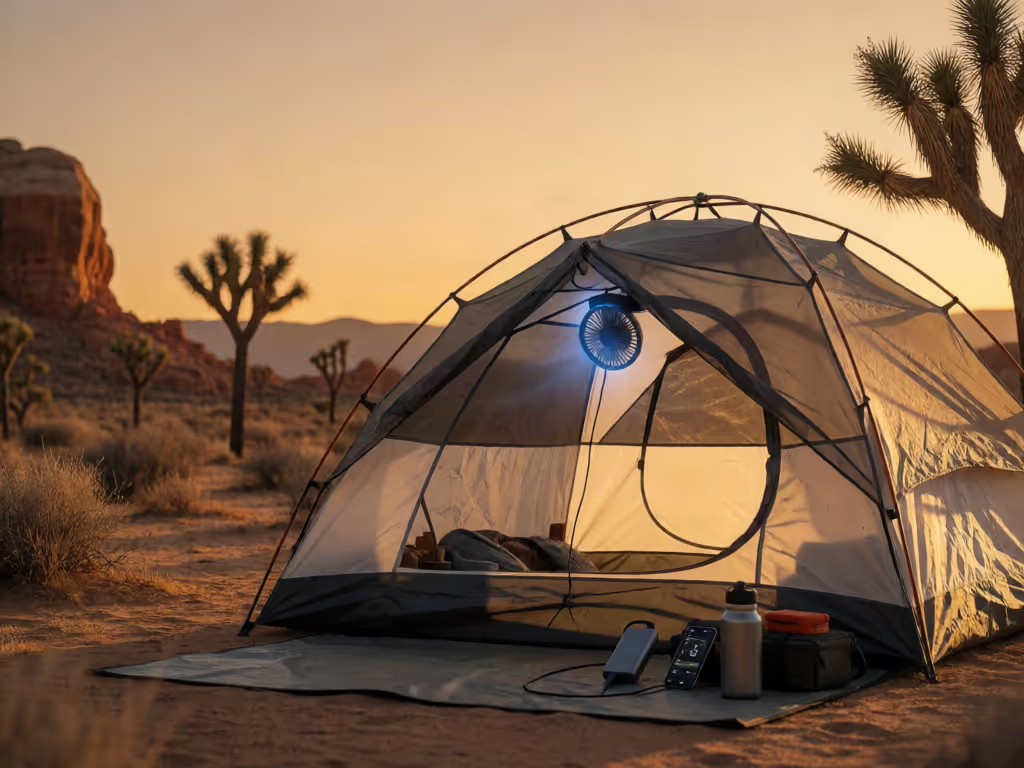
Once vents and windows are set, position the fan to serve sleepers rather than indiscriminately stirring the whole interior. A retailer's camping guidance suggests a small fan near the peak or angled downward over the sleeping area. That may be worth trying in still conditions because direct airflow can feel more comfortable, even without a meaningful change in air temperature.
There is an important limitation: no universal mounting method works across all shelters. Use only attachment points that the tent maker approves, follow the fan instructions, and do not assume a ceiling loop is rated to carry a fan's weight. If the safest place is the floor or a stable surface, aim it across bodies rather than at loose fabric.
Measured routines turn storms into ordinary, manageable mornings, and they can make hot nights less dramatic, too.
Do tent fans work?
Yes, within a narrower definition of "work" than the marketing language sometimes implies, as this battery-powered tent fan guide explains. A battery operated tent fan moves air across skin, which can improve perceived comfort. It can be especially welcome when the campsite air is still and the tent has no natural breeze moving through it.
What it does not do is replace ventilation. If humid air remains trapped inside, a fan recirculates that existing air rather than sending moisture outdoors. Open vents and windows, fly clearance, and sensible rainfly management are the tools that support air exchange.
A practical bedtime workflow
For a shared tent, the quieter and less fiddly the routine, the more likely everyone will use it consistently:
- Set the shelter first. Tension the fly, open appropriate vents, and choose windows based on bugs, rain, and the direction of any breeze.
- Create lanes. Keep the door and vestibule clear for late-night exits; keep wet footwear and damp clothing from migrating into the sleeping zone.
- Place the fan for people, not gear. Aim airflow over the areas where sleepers will actually feel it. Avoid directing it at a rainfly or loose panel that could flap.
- Test the lowest useful setting before lights-out. A fan that seems acceptably quiet while people are talking may be irritating once the campsite settles.
- Recheck after everyone lies down. Confirm that the fan remains stable, clear of nighttime foot traffic, and aimed at the sleeping area.
On one sodden shoulder-season loop, I marked the morning drip lines before breakfast and reorganized the vestibule so socks, stove, and retriever each had a lane. The lesson applies in heat as well: small layout decisions preserve sleep better than adding gear at random.
How do I choose a quiet tent fan without chasing misleading specs?
Treat "quiet" as a personal sleep question, not a label. There is no collected independent comparison that can rank tent fans for noise, airflow, runtime, durability, or all-night suitability. Published numbers also may omit the speed setting, measurement distance, and test method, so they do not tell you exactly how a particular fan will sound beside your pillow. For more context on why materials, structure, and surroundings affect perceived noise, see this guide to tent acoustics and quieter camping.
Evaluate the trade-offs at home
A useful fan is one you can run at a tolerable setting for the portion of the night you need. Run this short, repeatable check before the trip:
- Charge it fully according to its instructions.
- Run each speed in a quiet room, with the fan placed about where it would be in the tent.
- Listen for motor tone, vibration against a surface, and any rattle created by its hook or stand.
- Note which setting is quiet enough for conversation, reading, and sleep.
- Repeat with the angle you expect to use; a fan can sound different when its housing or base touches another object.
Runtime claims are setting-dependent. For example, one retailer listing for a 6,000 mAh fan claims up to six hours on high and up to 18 hours on low, while another listing makes a different maximum-runtime claim for a 10,400 mAh model without specifying the operating mode. Those examples are not a benchmark and are not independently verified. They are a reminder to test your fan at the setting you can actually sleep with.
For family trips, this is less glamorous than shopping by battery capacity alone, but it prevents a familiar 2 a.m. compromise: a fan too loud on the setting that moves enough air, or a quiet setting that ends before dawn.
Can you have a fan in a tent safely?
A portable fan can be part of a tent setup, but follow the tent and fan instructions. Do not rig it to an unapproved overhead loop or improvised line.
Rechargeable-fan battery routine
If your fan uses a lithium-ion battery:
- Charge it with the supplied charger or one approved by the manufacturer.
- Do not leave it unattended while charging, and do not charge it while you are sleeping.
- When choosing a fan with a lithium-ion battery, look for a nationally recognized safety-certification mark and check the CPSC recall database.
- Take the device out of service if it becomes extremely hot, swells or bulges, leaks, hisses, cracks, pops, smells unusual, or smokes. Smoking can indicate a fire emergency.
These precautions are about the battery device, not the tent. A fan is not permission to compromise rain protection or overload tent hardware.
How can I reduce condensation while using a tent fan?
Do not ask the fan to solve a moisture problem alone. For a fuller explanation of airflow and moisture control, see our guide to solving tent condensation. Condensation can occur even in a well-designed tent, because it depends on humidity, occupants, wet gear, temperature, site conditions, and shelter design.
Instead, pair the fan with a simple moisture routine: keep wet items out of the sleeping area where feasible, maintain fly-to-inner clearance, and use vents and windows to exchange humid inside air with drier outside air when weather permits. If rain or wind requires you to close down the tent, accept that the condensation trade-off may change; weather protection comes first.
A fan may still improve perceived comfort, but it should not be treated as a guarantee against dampness or morning drips.
Further exploration: make your first hot-night test uneventful
Before the next warm-weather trip, pitch your tent at home or in a calm campsite and rehearse the entire sleep setup: vent positions, fan location, low-speed noise, exit path, and where damp items will live. Then adjust only one thing at a time.
That modest test gives you more useful information than a long list of tent cooling solutions. The winning arrangement is the one that lets everyone settle down quickly, keeps the tent orderly, and makes the morning feel ordinary enough that nobody talks about the heat at all.
Related Articles