
Camping Tent Fan FAQ: Battery-Powered Cooling Without Hookups
By Aisha Mbaye • 25th Sep
What to do
A battery-powered tent fan can improve comfort by moving air across the sleeping area, but the evidence does not establish that fans generally lower tent temperature. It does not replace ventilation or provide a heat-safety plan. Choose by intended overnight runtime, noise, airflow, and permitted placement—then test the complete sleep layout before leaving.
- Start with: Treat the fan as personal airflow. Begin near the foot end, aimed along the sleeping area, while following the fan and tent instructions.
- Then: Compare runtime at your actual speed setting, plus airflow and noise.
- Important prerequisite: Keep vents open, the intake and guard clear, and every door or zipper fully usable.
Important: Placement, weather limits, runtime, and charging directions vary by the exact fan and tent; follow their instructions. For U.S. air travel, lithium-ion power banks belong in carry-on baggage, not checked bags.
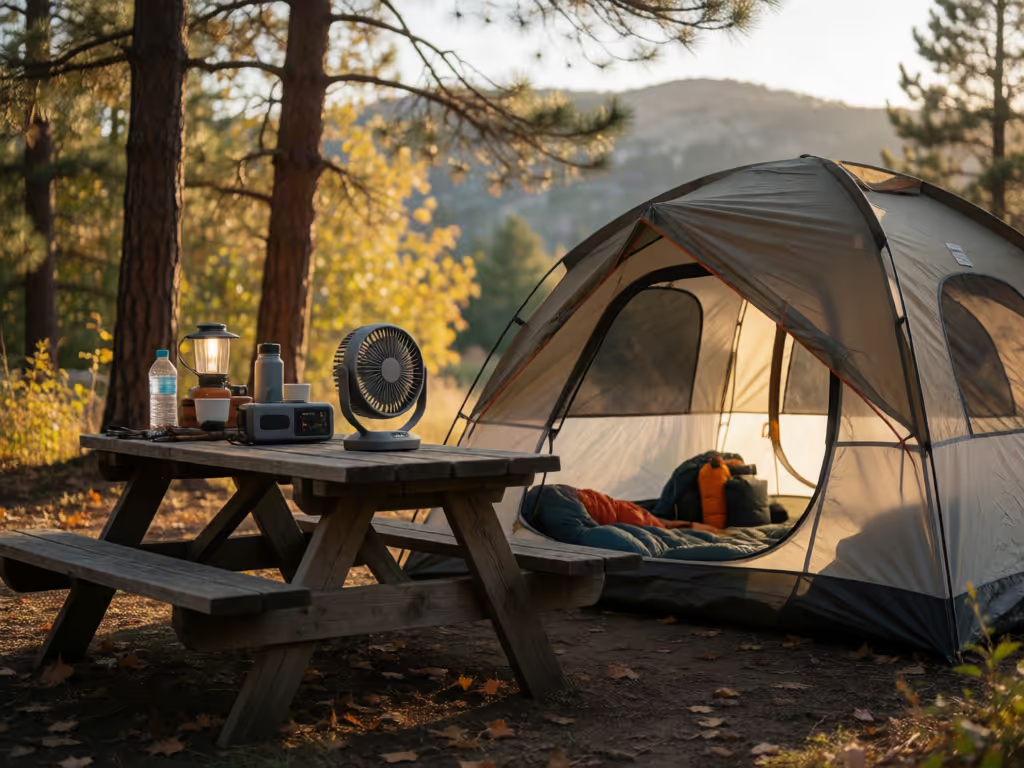
A tent fan can make a close, still sleeping space feel more comfortable, but a camping tent fan works best when it is treated as personal airflow (not as a replacement for the tent's ventilation design or a heat-safety plan). For hot weather camping comfort, the useful questions are less about a "best" model and more about placement, overnight runtime at the speed you will actually use, noise, and whether the fan can coexist with open vents and a clear exit.
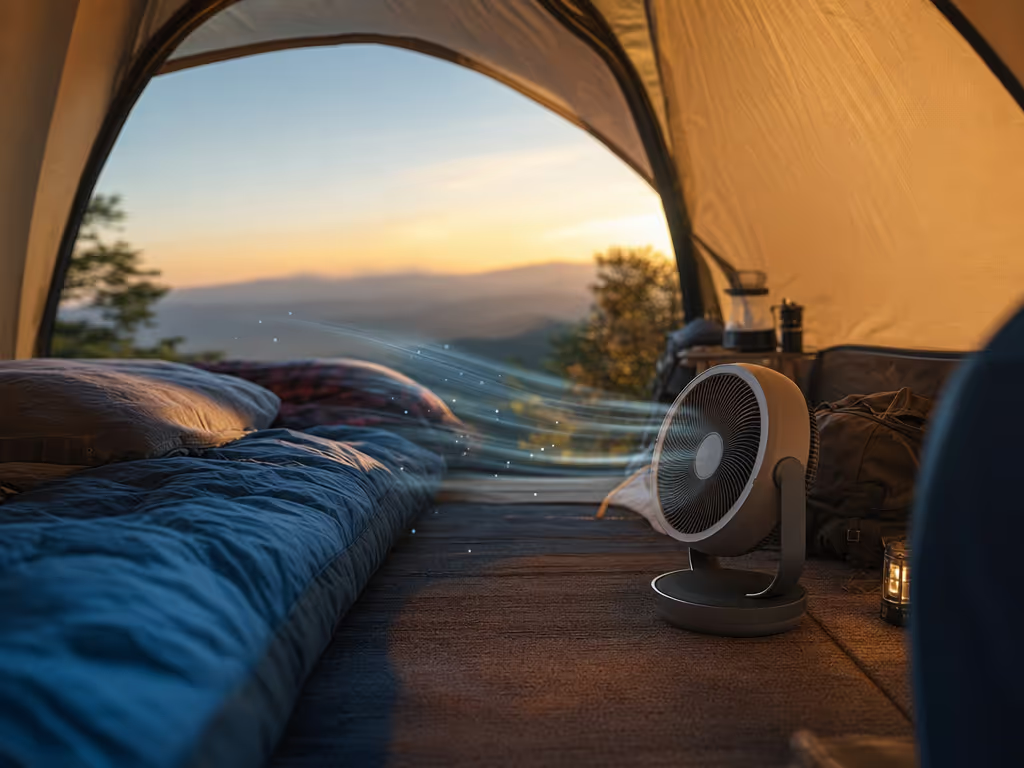
What can a battery-operated tent fan actually do?
A portable fan may improve comfort by moving air across the sleeping area. That is the practical promise: airflow directed where a person is lying down.
It is important not to overstate the role. For the broader safety side of warm-weather trips, review this tent camping safety guide before relying on a fan for comfort. A fan does not replace the ventilation requirements in your tent's instructions, and it is not a substitute for hydration, shade or cooling access, trip planning, or recognizing heat illness. The evidence also does not establish a general claim that fans lower the air temperature inside a tent. Shop and pack for air movement rather than assuming a battery-operated tent fan will change the weather inside your shelter.
That distinction makes tent cooling solutions easier to evaluate. First, manage the tent as a shelter: use its designed vents and preserve the door and zipper operation. Then use the fan to improve the comfort of the people inside.
A fan is an airflow tool. Ventilation is a tent-system requirement.
Can you put a fan in a tent?
Yes, provided the finished placement follows the instructions for both the fan and the tent. The details matter because a useful position must not interfere with the tent's functions.
What is a sensible starting position?
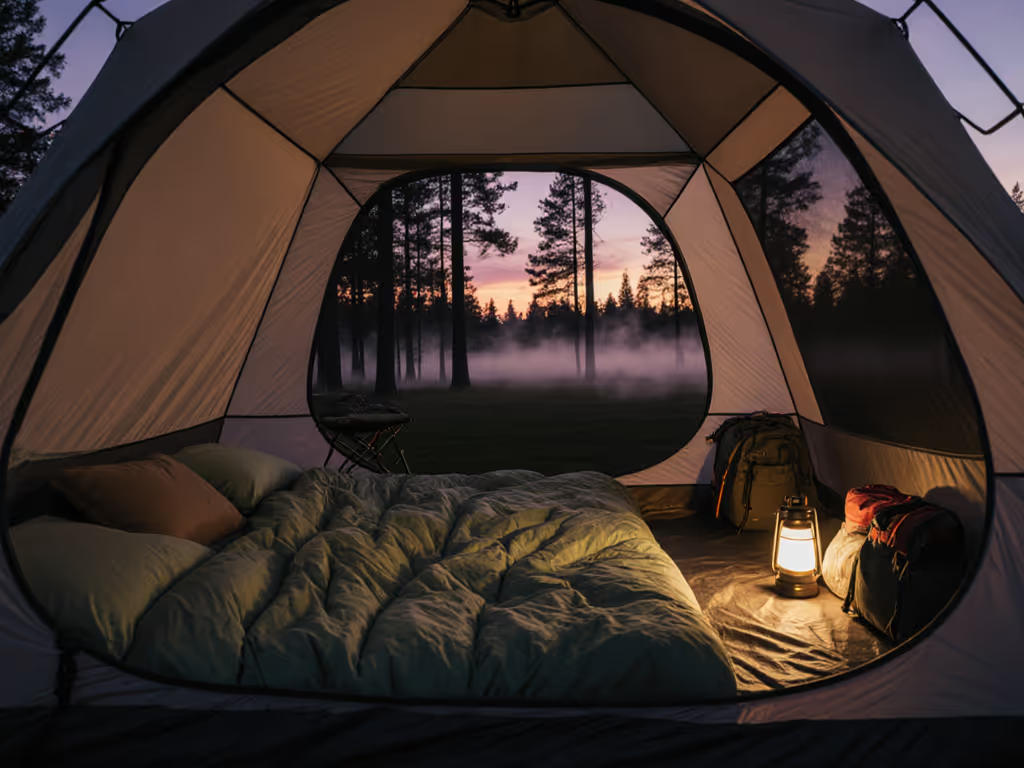
For many small and medium tents, a practical starting point is near the foot end of the sleeping area, aimed lengthwise along the sleepers.
It is only a starting point. Final placement depends on the completed tent layout, available support, sleeping arrangement, required clearances, and the equipment instructions. Set up the tent with pads, bags, and the gear that will actually be inside before deciding where the fan belongs.
Should the fan hang or sit on the floor?
Either can work when the instructions permit it.
- Hanging placement: Use only an attachment method supplied or permitted by the relevant equipment instructions.
- Tabletop placement: Choose a position that remains stable when the tent floor is loaded or disturbed.
- Floor placement: Follow the fan's placement instructions.
- Any placement: Keep the intake and guard clear of tent fabric, bedding, clothing, hair, and straps.
Keep the controls and any permitted connection accessible without running across the exit path. Just as importantly, leave designed vents open and make sure the door and zippers still move fully. A fan that blocks a vent or turns a nighttime exit into an obstacle is badly placed, even if it feels strong on its highest setting.
Will a tent fan prevent condensation?
Do not buy a fan on the assumption that it will independently solve condensation. Condensation forms when warm, moist air inside the tent meets a colder rainfly or another cooler tent surface. Moisture comes from ambient humidity, occupants' breathing, and wet items stored inside.
The established response is proper tent ventilation: open rainfly vents, especially opposing vents that create cross-ventilation, and open inner-tent windows when the conditions and tent design allow it. In appropriate weather, rainfly doors or roll-up sections may also help, but that choice remains dependent on rain and the shelter's design.
Occupancy changes the equation. More people in a smaller tent add warm air and moisture to a confined space, increasing the likelihood of condensation. A campsite with a light breeze can help carry moisture away, subject to the site's conditions, rules, and weather.
For families, this has a useful planning implication: a fan is not a reason to close every vent for privacy or to squeeze another sleeper into an already-tight tent. Preserve airflow first; then position the fan for personal comfort.
How much runtime do you need for overnight use?
Treat stated runtime as a speed-specific comparison, not a promise created by a large battery-capacity number. Runtime depends on power draw, and the manufacturer's runtime at the setting you intend to use is more useful than a headline capacity figure alone.
One independent comparison of seven specific camping fans recorded 5.75 to 60 hours at a tested speed close to 3 m/s. That is a wide spread, and the fans used different battery systems. It is a reminder to compare like with like: stated speed or mode, stated runtime, and the intended sleep duration.
Use this short runtime worksheet before a trip:
- Choose the real use case: falling asleep, the full night, a child's nap, or afternoon downtime in the tent.
- Find the relevant setting: compare the manufacturer's stated runtime at the low, medium, or other setting you expect to run.
- Add a margin: do not plan around the most optimistic number if the fan is central to a good night's sleep.
- Test the routine before departure: fully charge the fan and run it at home on your chosen setting for the period that matters to you.
That last step is not glamorous, but it helps you determine whether the fan fits your actual overnight routine.
How quiet is a camping tent fan at night?
Noise is personal, but it should be considered alongside airflow rather than after purchase. In the same independent seven-fan test, fastest-setting measurements ranged from 42 to 67 dBA. Those results are specific to the tested models and test conditions, not a category-wide benchmark.
The useful takeaway is simple: do not assume "portable" means quiet enough for sleep, and do not judge overnight suitability solely from a top-speed claim. Compare the maker's noise information where available, then listen to the fan in your own sleeping space before the trip. The sound that is tolerable while packing a car can be intrusive in a small tent after midnight.
What specifications are worth comparing?
For a camping tent fan, compare four items together:
- Power draw
- Battery capacity and stated runtime
- Airflow
- Noise level
Then add the practical compatibility check: can it be mounted only as its instructions allow, kept clear of bedding and fabric, and operated without obstructing a vent, door, or zipper? For related setup and comfort additions, see our guide to essential tent accessories.
This is where a comparison becomes clearer. A claimed runtime matters only at a setting that suits your sleeping layout, and noise belongs in the same comparison. Begin by buying for the conditions you can verify.
Replaceable beats recyclable when a simple, durable piece of gear continues to meet the job it was bought for. For fans, the evidence here supports a narrower purchasing discipline: choose a model with documented runtime, airflow, noise, permitted placement, and environmental-use instructions rather than relying on broad comfort claims.
Can a camping fan get wet?
Do not assume that a portable fan tolerates rain. In one reviewer's heavy-rain test, a specific fan without an IP rating stopped working after 30 minutes; it later resumed after drying, but its sleep timer no longer worked. That is one test of one unit, not a durability rating for all camping fans.
The practical conclusion is to follow the environmental-use instructions for the exact fan you own.
Can you fly with a fan power bank?
For U.S. air travel, power banks containing lithium-ion batteries must go in carry-on baggage and are prohibited in checked bags. This is a TSA screening rule, and final checkpoint decisions rest with TSA personnel. Check current airline and screening guidance before you travel, particularly when flying internationally.
What is the best portable fan for a camping tent?
There is no evidence-based universal winner because the best choice depends on your tent layout and the settings you need overnight. Instead of chasing a single recommendation, use a decision sequence:
- Confirm the intended placement and approved mounting method.
- Verify that vents, door operation, and the exit path remain clear.
- Compare stated runtime at your intended setting - not battery capacity alone.
- Compare airflow and noise together.
- Check the exact product's environmental-use instructions.
Your next step: do a full sleep-layout test
Before the next warm-weather trip, pitch the tent or lay out its footprint at home. Place every sleeping pad, bag, and piece of nighttime gear, open the vents you would use, and test the fan in its proposed position. Check clearance around its intake and guard, shake the loaded floor if it will sit on a surface, and confirm that every zipper and exit still works freely.
That check turns a vague purchase into a workable system for sleeping comfortably in a tent, quiet nights, open ventilation, and airflow aimed where it matters.
Related Articles